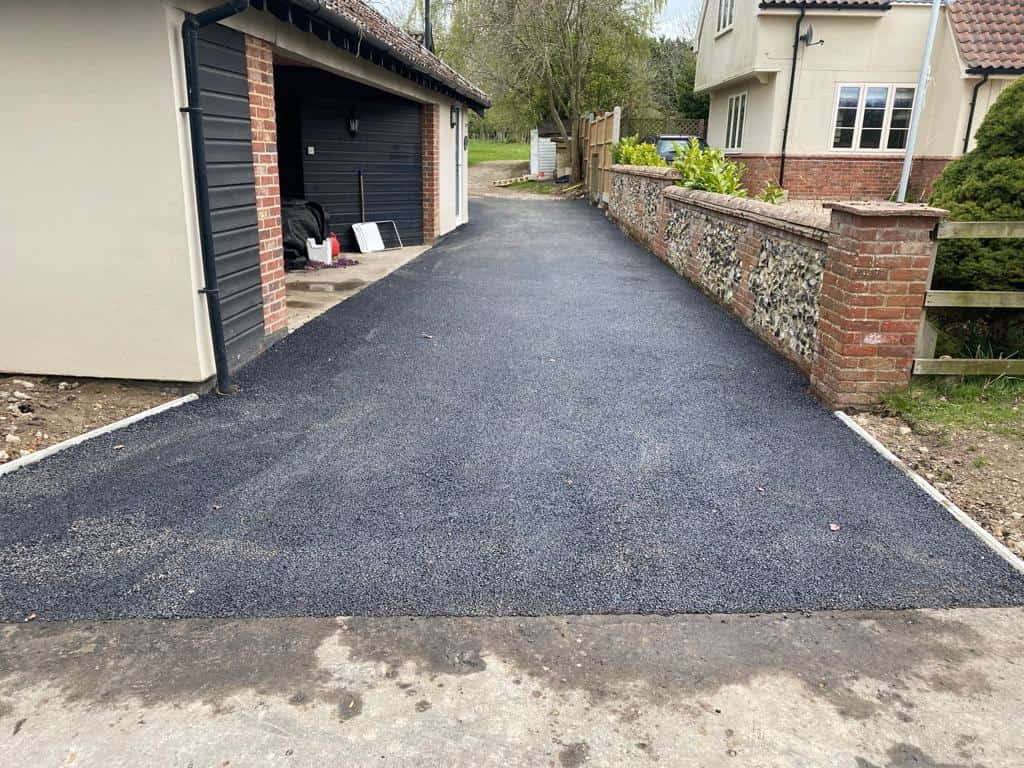
Why Is Your Block Paving Driveway Sinking or Becoming Uneven?
Block paving is designed to create a durable, attractive and practical driveway surface, but its performance depends on considerably more than the blocks visible from above. Beneath them sits a carefully prepared construction that supports vehicle loads, maintains the correct levels and helps keep individual blocks securely positioned.
When sections of a block paving driveway begin sinking or becoming uneven, the movement often indicates that something beneath the surface has changed. The bedding layer may have moved, supporting material may have settled, water may be affecting the construction, or repeated vehicle loading may be exposing an underlying weakness.
For homeowners in Folkestone, Kent, understanding why the movement has occurred is important before repairs begin. Simply lifting low blocks and adding more material beneath them may improve the appearance temporarily, but a lasting repair depends on identifying and addressing the reason the area moved in the first place.
What Causes Block Paving Driveways to Sink or Become Uneven?
Block paving works as a complete system. Individual blocks form the visible surface, but they rely on the bedding layer, sub-base, edge restraints and underlying ground to provide stability.
When any part of this construction loses support or moves, the blocks above can follow. The result may be a shallow depression, individual uneven blocks, visible wheel tracks or a larger section that gradually sinks.
The location and pattern of the movement can provide useful clues about what is happening beneath the driveway.
Poor Ground Preparation Can Lead to Settlement
A dependable driveway begins with suitable preparation of the ground beneath it.
If the underlying area has not been prepared appropriately, sections can settle after the driveway is completed. This movement may happen gradually as the surface experiences repeated vehicle loading and changing ground conditions.
The blocks themselves may remain perfectly serviceable while the layers supporting them move downwards.
The Sub-Base Provides Essential Support
The sub-base is one of the most important parts of a block paving driveway because it distributes loads across the underlying ground.
If this layer is inadequate, unevenly compacted or has deteriorated in a particular area, the surface above can begin losing its level. Depressions may then develop where the construction no longer provides consistent support.
This is why repairing sunken block paving should involve more than concentrating on the blocks alone.
Inadequate Compaction Can Become Apparent Later
Supporting materials need to be compacted appropriately during driveway construction.
Where compaction is inconsistent, apparently stable material may continue settling after the driveway enters regular use. Vehicle movements can accelerate this process by repeatedly loading the same sections.
A driveway may therefore look satisfactory when first installed but develop low areas later as inadequately compacted material settles.
Repeated Vehicle Loading Can Expose Weak Areas
Cars frequently follow similar routes when entering, parking and leaving a driveway.
This means some sections experience considerably more loading than others. If the underlying construction contains a weak area, repeated vehicle movements can make the problem increasingly noticeable.
Sinking along common wheel paths can therefore indicate that the supporting layers deserve closer inspection.
Individual Sunken Blocks May Have a Local Cause
Not every uneven block paving driveway has widespread structural problems.
Sometimes only a small group of blocks has moved because the bedding beneath that particular section has changed. If the surrounding construction remains stable, a localised repair may be entirely appropriate.
Professional assessment helps determine whether the movement is genuinely isolated before deciding how much of the surface needs lifting.
Larger Depressions May Suggest Deeper Movement
Where a broad area has sunk together, the cause may extend deeper than the immediate bedding layer.
The shape and depth of the depression can provide useful evidence. A larger section moving as one area may indicate settlement within the supporting construction rather than movement of individual blocks.
In this situation, simply adjusting the upper surface may leave the underlying cause unchanged.
Water Can Influence the Stability of the Driveway
Drainage is an important consideration for any driveway.
If water regularly collects in one location or reaches supporting materials in an unintended way, it can influence the stability of the construction beneath the blocks. Persistent water-related problems can gradually contribute to movement and settlement.
Correct levels and suitable drainage therefore form an important part of both initial installation and repair work.
Sunken Areas Can Begin Collecting More Water
Once part of a driveway has dropped, a secondary problem can develop.
The depression may begin collecting rainfall that previously drained away. This standing water can make the uneven area more inconvenient while also increasing the amount of moisture concentrated around the affected section.
As a result, an initial settlement problem can become progressively more noticeable if it is left unaddressed.
Changes Around Drainage Points Deserve Attention
Block paving around drainage channels and other transitions needs appropriate support.
If material around these features settles or moves, neighbouring blocks can lose their alignment. Small gaps and uneven edges may then develop around the drainage detail.
Repairing these sections correctly requires restoring suitable support while maintaining the intended surface levels.
Bedding Material Can Move Beneath the Blocks
Block paving is generally laid over a prepared bedding layer that allows the blocks to be positioned accurately.
If this material becomes disturbed or displaced, individual blocks can settle differently from their neighbours. The surface may begin feeling uneven underfoot even before a substantial depression becomes visually obvious.
Restoring the level requires appropriate preparation of the bedding beneath the affected blocks rather than simply forcing them back into position.
Edge Restraints Help Keep the Surface Together
The perimeter of a block paved driveway has an important structural role.
Suitable edge restraints help prevent blocks from gradually spreading outwards under repeated loading. If an edge becomes unstable, nearby blocks may begin moving sideways, opening joints and affecting the alignment of the surrounding surface.
Movement at the edge can therefore gradually influence a larger area if it is not addressed.
Loose Blocks Can Be an Early Warning Sign
Blocks that rock or move slightly underfoot can indicate that support beneath them has changed.
At first, the surface may still appear reasonably level. However, continued movement can disturb neighbouring blocks and jointing material, allowing the affected area to become increasingly uneven.
Investigating movement at an early stage can sometimes keep the required repair relatively contained.
Jointing Material Contributes to Surface Stability
The joints between paving blocks are not simply decorative gaps.
Appropriate jointing material helps the blocks work together as an interlocked surface. If joints lose material extensively, individual blocks can have greater opportunity to move.
Joint condition should therefore be considered alongside the levels and supporting layers when assessing an uneven driveway.
Open Joints Can Allow Progressive Movement
When blocks begin separating, the surface can lose some of its consistency.
Small changes may initially appear insignificant, but repeated loading can encourage further movement. Once several blocks are no longer sitting firmly together, surrounding sections can gradually become affected.
Correcting the underlying reason for the movement is more effective than repeatedly adding jointing material without investigating why the blocks are shifting.
Previous Excavations Can Create Localised Settlement
Sometimes a driveway contains sections where the ground beneath has previously been disturbed.
If an excavated area was reinstated differently from the surrounding construction, it may settle at another rate. This can create a distinct sunken line or patch even when the rest of the driveway remains level.
The pattern of the depression can sometimes help identify this type of localised problem.
Uneven Blocks Can Affect Everyday Use
A sunken driveway is not purely an appearance issue.
Depressions can hold water, while individual raised or lowered blocks can make walking across the surface less comfortable. Larger changes in level can also make the driveway feel noticeably less consistent when vehicles travel across it.
Restoring appropriate levels therefore improves both the appearance and practical usability of the surface.
Why Simply Adding Sand Under the Blocks May Not Be Enough
When blocks have sunk, the obvious solution can appear to be lifting them and adding bedding material beneath them.
That approach can work where the cause is genuinely confined to the bedding layer and the deeper construction remains stable. However, if the sub-base or underlying ground has settled, adjusting only the top layer does not resolve the deeper weakness.
The cause needs to be established before deciding how far the repair should extend.
A Localised Repair Can Preserve the Rest of the Driveway
One advantage of block paving is that individual sections can often be lifted without removing the complete driveway.
Where the surrounding construction remains sound, affected blocks can be taken up so the area beneath can be inspected and appropriately reinstated. Serviceable blocks may then be relaid to integrate with the surrounding surface.
This makes targeted repair possible when deterioration is genuinely localised.
Several Sunken Areas May Require a Broader Assessment
A driveway containing numerous depressions presents a different situation.
If separate areas continue settling, there may be a common problem affecting the supporting construction. Repairing each depression independently without considering the overall pattern may result in further areas appearing later.
Assessing the complete driveway helps establish whether the movement is isolated or part of more widespread deterioration.
Previous Repairs Can Provide Useful Clues
An area that has already been repaired and subsequently sinks again deserves closer investigation.
Repeated movement can indicate that the original work corrected the surface level without fully addressing what was happening beneath it. Alternatively, the surrounding construction may have continued changing.
Understanding why a repair has not remained stable helps determine what should be done differently.
Surface Levels Need to Be Restored Carefully
Repairing block paving is not simply about making every block look visually level.
The finished surface needs appropriate levels across the wider driveway so that it works with surrounding areas and manages rainfall as intended. A repaired patch that is raised or lowered incorrectly can introduce a new problem even if the individual blocks appear neatly laid.
The affected section should therefore be reinstated in relation to the surrounding surface.
Not Every Uneven Driveway Needs Complete Replacement
Sinking can look concerning, but it does not automatically mean the entire block paved driveway has reached the end of its useful condition.
If movement is limited to one area and the remaining construction is stable, targeted repairs may restore the affected section effectively. More extensive work is generally considered when assessment reveals broader weaknesses across the driveway.
The amount of work should reflect the actual extent of the problem.
Why Professional Assessment Matters
The visible blocks show where movement has occurred, but they do not always reveal why.
At Folkestone Driveways & Surfacing, we assess the pattern of sinking, surrounding surface levels, edge condition, drainage and the stability of the affected construction. Where necessary, lifting part of the paving can provide a clearer understanding of what has happened beneath the surface.
For block paving driveways in Folkestone, Kent, this cause-first approach helps ensure repairs are directed towards the actual weakness rather than simply disguising the visible depression.
Early Repairs Can Help Prevent the Area Becoming Larger
A small section of movement may initially affect only a few blocks.
If those blocks continue rocking or settling, surrounding joints and neighbouring paving can experience additional movement. Water may also begin collecting in the developing depression.
Addressing the issue while it remains relatively contained can help protect adjacent sections that are still performing correctly.
Good Block Paving Depends on What You Cannot See
The finished blocks naturally receive most of the attention because they determine the appearance of the driveway.
However, long-term stability depends heavily on preparation beneath them. Ground conditions, sub-base construction, compaction, bedding, drainage, edge restraints and correct laying all contribute to how the driveway performs.
A professional block paving installation or repair therefore involves considerably more than arranging blocks neatly at surface level.
Conclusion
A block paving driveway can begin sinking or becoming uneven when the layers supporting the blocks move, settle or lose stability. Inadequate compaction, sub-base weakness, disturbed bedding, water-related problems, unstable edges and repeated vehicle loading can all contribute to visible changes at the surface.
The pattern of movement is important. A few sunken blocks may require only a localised repair, while several depressions or recurring settlement can indicate that a wider section of the driveway needs investigation. Simply raising the blocks without identifying why they moved may only provide a temporary improvement.
If your block paving driveway is sinking, collecting water or becoming uneven in Folkestone, Kent, contact Folkestone Driveways & Surfacing. We can assess the affected area, identify the likely cause of the movement and recommend an appropriate repair based on the condition of the driveway.
Call us on: 01303 763 895
Click here to find out more about Folkestone Driveways & Surfacing
Click here to complete our contact form and see how we can help with your driveway needs.